
What Happens in a Child Counseling Session?
For many parents, the idea of bringing a child to counseling can feel uncertain. You may wonder what actually happens during a session, whether your child will talk, and how a therapist helps them work through challenges. The good news is that child counseling is designed to be a safe, supportive, and age-appropriate experience that helps children express themselves, build coping skills, and improve emotional well-being.
Creating a Safe and Welcoming Environment
The first goal of a child counseling session is helping the child feel comfortable. Unlike adult therapy, which often centers on conversation, child counseling frequently incorporates play, art, games, and other creative activities. These tools help children communicate their thoughts and feelings in ways that feel natural to them.
When a child arrives, the therapist typically spends time building rapport through casual conversation or engaging activities. This relationship is one of the most important parts of the counseling process. Children are more likely to open up when they feel safe, understood, and accepted.
Getting to Know the Child
During the early sessions, the therapist works to understand the child's strengths, challenges, interests, and family dynamics. Depending on the child's age and needs, this may involve:
Talking about school, friends, interests, and hobbies
Playing games or using toys to explore emotions and relationships
Drawing or completing creative activities
Discussing situations that may be causing stress, worry, or anger
Parents are often involved in this process as well. Therapists may gather information about behaviors at home, concerns at school, family changes, or other factors that may be impacting the child.
Exploring Feelings and Challenges
As trust develops, children begin learning how to identify and express their emotions. Many children struggle to put feelings into words, so therapists use age-appropriate techniques to help them understand what they are experiencing.
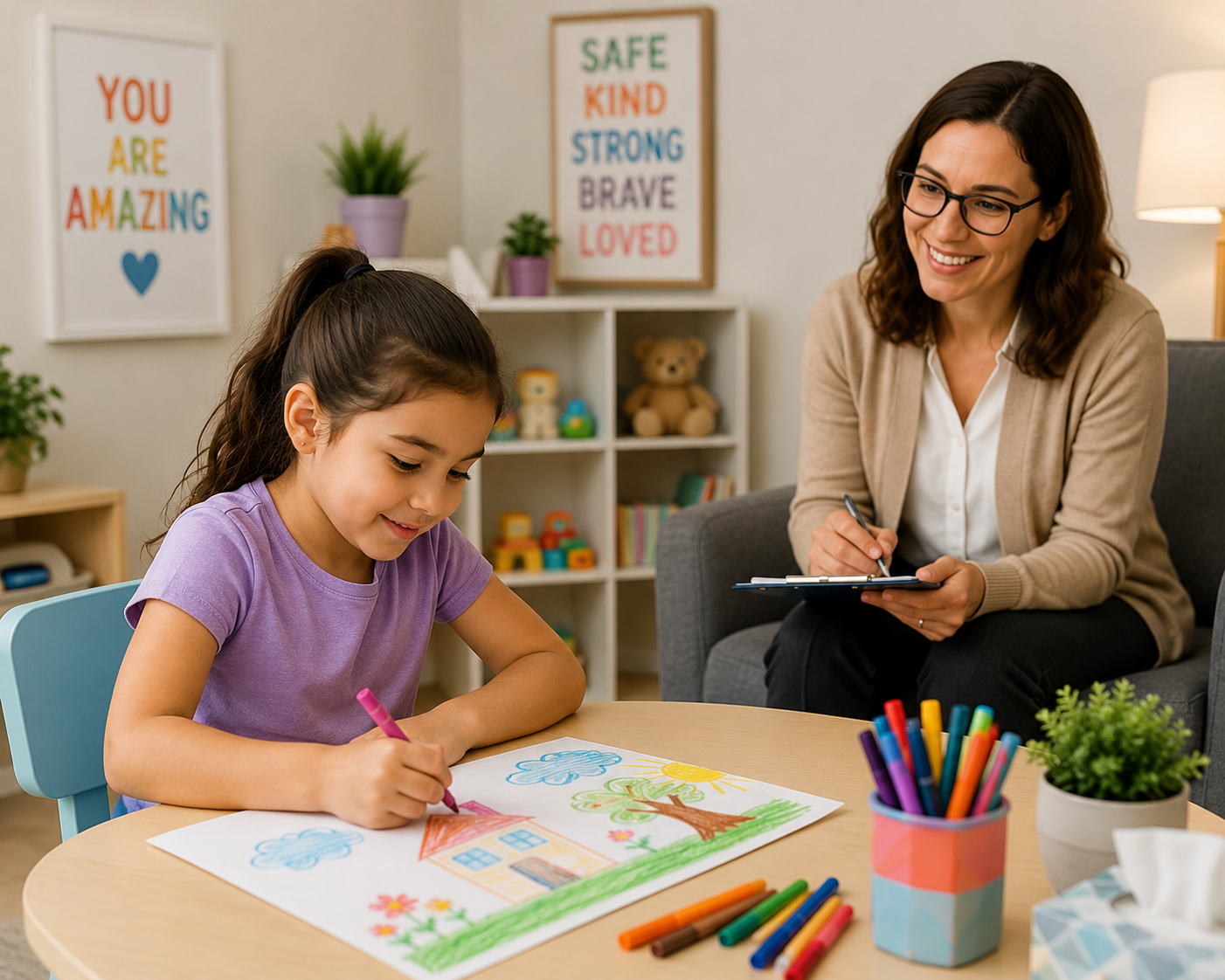
Sessions may focus on concerns such as:
Anxiety and worries
Depression or sadness
Behavioral challenges
ADHD-related difficulties
Family changes, such as divorce or separation
Grief and loss
Social skills and friendships
Trauma or stressful experiences
The therapist helps the child recognize emotions, understand triggers, and develop healthier ways of responding to difficult situations.
Learning Coping Skills
A major part of counseling involves teaching practical skills that children can use in everyday life. Depending on the child's needs, these skills may include:
Deep breathing and relaxation techniques
Emotional regulation strategies
Positive self-talk
Problem-solving skills
Communication skills
Mindfulness exercises
Healthy ways to manage anger or frustration
Rather than simply talking about these skills, therapists often practice them during sessions through games, role-playing, and interactive activities.
Partnering with Parents
Child counseling works best when parents and caregivers are involved. While confidentiality is respected, therapists often share general themes, progress, and recommendations with parents. They may also provide strategies to reinforce skills at home.
This collaborative approach helps ensure that children receive consistent support both inside and outside the counseling office.
What Should Parents Expect?
Every child is unique, and counseling looks different for each family. Some children jump right into activities, while others take time to warm up. Progress may happen gradually as trust develops and new skills are practiced.
Most importantly, counseling is not about "fixing" a child. It is about providing a supportive space where they can understand their emotions, build resilience, and gain the tools they need to navigate life's challenges with greater confidence.
When children feel heard, supported, and empowered, child counseling can become an important step toward healthier emotional growth and lasting well-being.
-Ciera Canaday, LCSW and Clinical Director