
How Child Counseling Differs from Adult Therapy
While both child counseling and adult therapy aim to improve mental health and emotional well-being, the way they are approached can look very different. Children are not just “small adults” - they think, feel, and communicate differently. Because of this, counselors tailor their methods to meet the developmental, emotional, and cognitive needs of children. Here’s a closer look at how child counseling differs from adult therapy.
Communication Style
Adults can usually express their thoughts and emotions clearly through conversation. Children, however, may not yet have the vocabulary or self-awareness to do this. Instead of relying solely on talking, child counselors often use play, storytelling, art, and other creative methods to help children express themselves in ways that feel natural and safe.
Therapeutic Techniques
Adult therapy often focuses on verbal processing, reflection, and cognitive strategies such as identifying thought patterns and working through past experiences. In contrast, child counseling is typically more interactive and hands-on. Techniques like play therapy, drawing, role-playing, and games allow children to explore emotions, build coping skills, and solve problems in an engaging and developmentally appropriate way.
Focus of Treatment
In adult therapy, the focus is often on self-awareness, personal growth, trauma processing, or managing mental health conditions. Child counseling, on the other hand, often emphasizes helping children understand and express their emotions, improve behavior, develop coping skills, and build confidence. The goals are often more concrete and tied to the child’s daily environment, such as school or family life.
Involvement of Parents or Caregivers
One of the biggest differences is the level of caregiver involvement. Children rely heavily on their parents or caregivers for support, so they are often included in the counseling process. Therapists may provide updates, parenting strategies, and tools to reinforce progress at home. In adult therapy, the individual is typically more independent, and outside involvement is limited unless specifically requested.
Developmental Considerations
Children are still growing emotionally, socially, and cognitively. This means therapists must consider a child’s age, developmental stage, and life experiences when choosing approaches and setting goals. Additionally, one eight year old child may have more or less emotional and cognitive awareness than an eight year old peer. Adults generally have more life experience and self-awareness, allowing for deeper exploration of complex issues in a different way.
Session Structure and Environment
Child counseling sessions are often shorter and more flexible to match a child’s attention span and energy level. The environment is usually welcoming and engaging, often including toys, art supplies, and other child-friendly elements. Adult therapy sessions tend to be longer, more structured, and focused on conversation.
Final Thoughts
At its core, both child counseling and adult therapy share the same goal: to support healing, growth, and emotional well-being. However, the path to that goal looks different depending on the individual’s developmental stage. By meeting children where they are and using age-appropriate techniques, child counseling creates a safe and supportive space for children to learn, grow, and thrive.
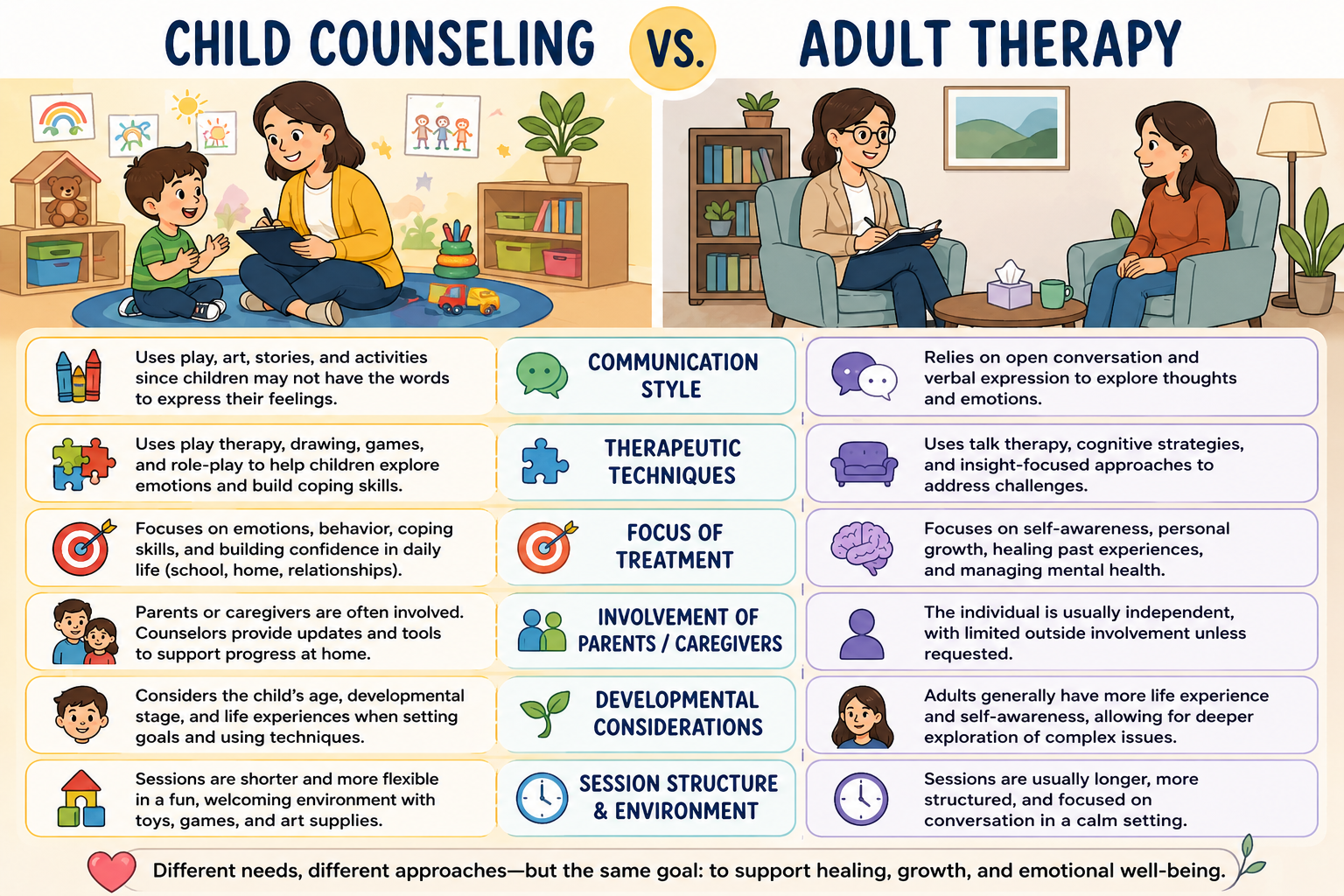
Colorful chart showing differences between child counseling and adult therapy.
-Ciera Canaday, LCSW and Clinical Director