
End-of-Year Anxiety: Why It Happens and How to Help Kids Cope
As the school year winds down, many families expect excitement - field days, class parties, summer plans, and graduation celebrations. While these moments can be joyful, the end of the school year can also bring a surprising increase in anxiety for many children and teens. Changes in routine, academic pressure, and uncertainty about what comes next can create emotional stress during what is supposed to be a celebratory time.
Understanding why end-of-year anxiety happens can help parents and caregivers support children through the transition more smoothly.
Why Anxiety Increases at the End of the School Year
For many students, the end of the school year comes with a sudden shift in expectations. Final exams, projects, and assessments often pile up all at once. Even younger children who may not have formal exams can still feel pressure to finish assignments, complete testing, or meet academic goals before the year ends.
In addition to academic stress, routines begin to change. Teachers may relax normal schedules, classrooms become more chaotic with events and celebrations, and students may begin saying goodbye to teachers or friends who are moving away or attending different schools next year.
For children who rely on structure and predictability, these shifts can feel overwhelming. The loss of routine- even when it leads to summer vacation - can create uncertainty that fuels anxiety.
Some children also experience social worries. Questions like Will I have friends next year? What if my teacher is strict? What if school gets harder? can quietly build in their minds.
Signs a Child May Be Experiencing End-of-Year Anxiety
Children do not always say they feel anxious directly. Instead, anxiety often appears through behaviors such as:
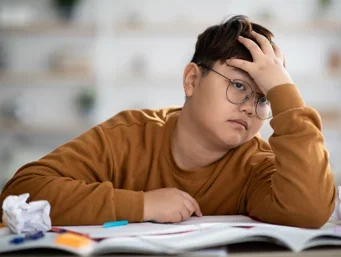
Anxious boy working on homework
Increased irritability or emotional outbursts
Trouble sleeping or frequent worries at bedtime
Complaints of headaches or stomachaches before school
Avoiding homework or school-related conversations
Difficulty concentrating or increased forgetfulness
Self-isolating behaviors
Recognizing these signs early allows parents to respond with support rather than frustration.
Healthy Ways to Help Children Cope
1. Keep Some Routine Intact
Even if school schedules become unpredictable, maintaining routines at home can provide stability. Consistent meal times, bedtimes, and homework routines help children feel grounded during periods of change.
2. Talk About What’s Coming Next
Sometimes anxiety grows simply because kids don’t know what to expect. Talking about summer plans, upcoming transitions, or next year’s school environment can help reduce uncertainty. If possible, visit the new school, look at photos online, or talk about what the next grade may be like.
3. Normalize Their Feelings
Let children know it is completely normal to feel nervous about transitions. Statements like, “A lot of kids feel mixed emotions at the end of the year,” help children feel understood rather than alone.
4. Practice Simple Calming Skills
Teaching kids simple coping tools can help them regulate anxious feelings. Deep breathing, short movement breaks, journaling, or listening to calming music can reduce stress and help reset their nervous system.
5. Celebrate Accomplishments
The end of the school year is also a time to acknowledge growth. Celebrating effort, not just grades, helps children build confidence and end the year with a sense of pride.
Looking Forward
Transitions are an important part of growing up. While the end of the school year may bring uncertainty, it also offers opportunities for reflection, celebration, and new beginnings. With patience, reassurance, and supportive routines, families can help children move through this season feeling confident and emotionally prepared for what comes next. If you or your child are struggling, please contact us for anxiety treatment as soon as possible. :)
-Ciera Canaday, LCSW and Clinical Director